
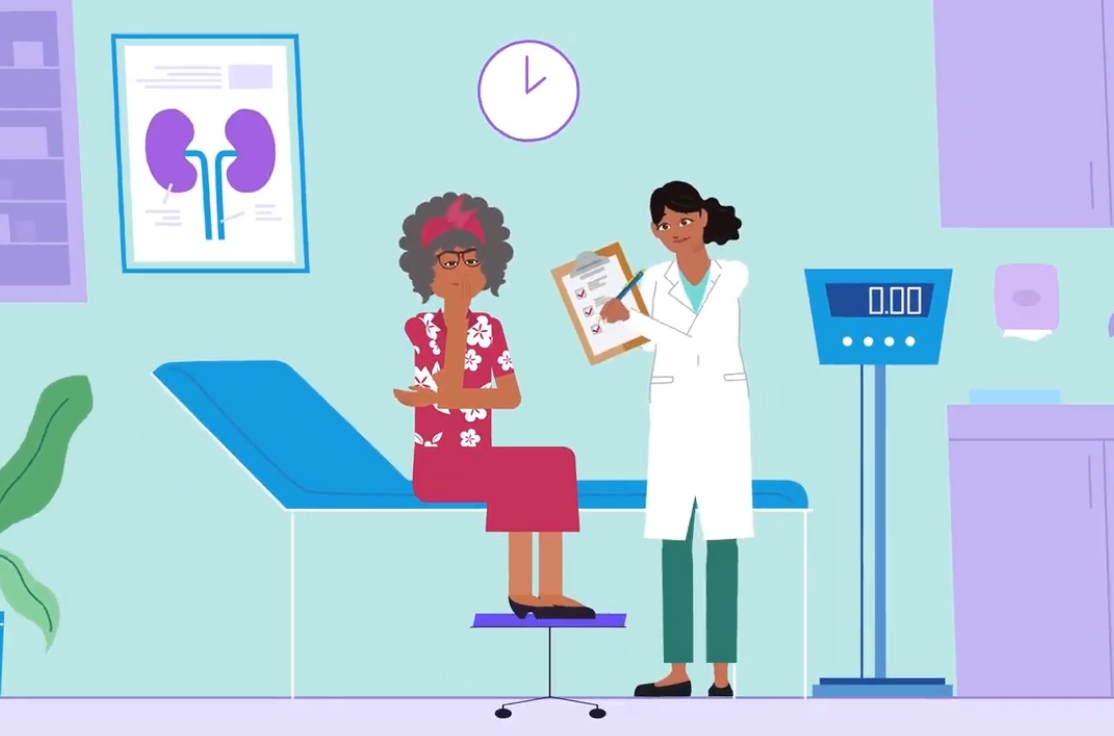
What does good primary care look like from the patient’s side of the desk? A new short film from the PCAT Africa project answers that question by following one woman’s journey through the health system.
The Primary Care Assessment Tool (PCAT) is a set of tools for measuring how well primary health care performs, from the perspective of users, providers and managers. Using surveys and assessments, it looks at five key aspects of primary care: access, continuity, person-centredness, comprehensiveness and coordination. The results can inform health reform, assess how well services are working, and compare clinics or health systems. The tool can also be adapted and validated for different cultural and geographical settings.
The film tells the story of Nomsa, a 52-year-old woman living in a rural district in South Africa, about 70 km from the nearest city. She has lived with diabetes for several years and recently developed kidney complications. With the nearest referral hospital 30 km away, her local clinic is her first and most frequent point of contact with the health system.
Access. When Nomsa notices swelling in her feet, she phones her clinic, but no one answers. A neighbour drives her there, but she arrives late in the afternoon to find the clinic has already reached its quota for the day. She goes to the hospital emergency centre instead, where she is triaged as non-urgent and waits for hours.
Continuity. Back at her clinic, Nomsa finds her folder has gone missing. She has to open a new file and explain her history again to a health worker who doesn’t know her, which undermines trust and delays her follow-up care.
Person-centredness. The health worker checks her blood sugar and lectures her about taking her medication, but dismisses her swollen feet as varicose veins. Nomsa leaves feeling unheard. PCAT helps assess whether care addresses a person’s concerns, expectations and life context, not just their medical condition.
Comprehensiveness. The clinic pharmacy has run out of her diabetes medication, and she is told to get it from the hospital or come back next week. Gaps like this interrupt treatment and put patients at greater risk.
Coordination. At her next visit, Nomsa has no letter or record from her emergency centre visit, so the clinic nurse has no results to work from. The two parts of the system don’t communicate, leaving her care fragmented.
Through Nomsa’s story, the film shows how measuring these five functions can reveal both the strengths and the gaps in primary health care, and point to where improvement is needed. As the film concludes, when care systems work for Nomsa, they work for everyone.
▶ Watch the video: https://youtu.be/5Pe8FRoQqp8